What payers will ask
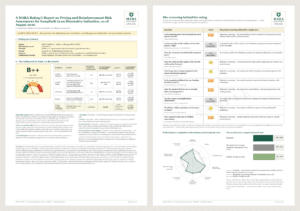
Is the clinical benefit the kind payers reward? — Clinical effectiveness
Winrevair demonstrated a statistically significant reduction in pulmonary vascular resistance (PVR) in the Phase 2 CADENCE trial compared to placebo, indicating comparable efficacy to existing options. However, the evidence is limited to a surrogate endpoint without data on clinical outcomes such as exercise capacity or hospitalization rates, which are critical for establishing true clinical effectiveness.
Does the economic case hold at the expected price? — Cost effectiveness
Winrevair is expected to be extremely costly, with estimates suggesting an ICER well above typical thresholds for cost-effectiveness. Current analyses from its approved indication in PAH indicate it is not cost-effective at the current price, and without robust evidence of clinical benefit in HFpEF, the economic outlook remains poor.
Is there quality-of-life evidence payers weigh? — Quality of life
Currently, there is no available data on health-related quality of life improvements for Winrevair in HFpEF. The absence of patient-reported outcomes or quality of life measures in the CADENCE trial means we cannot assess any potential benefits or harms in this domain.
Does the safety profile hold up for payers? — Safety and Adverse Effects
The safety profile of Winrevair appears manageable based on data from PAH trials, with no new safety signals reported in the CADENCE trial. Common adverse effects such as headache and bleeding risks are known and can be monitored, suggesting an acceptable safety profile for the intended patient population.
Was the drug compared against what payers expect? — Comparator Selection
The CADENCE trial appropriately used placebo plus standard care as a comparator, reflecting real-world management of HFpEF with pulmonary hypertension. This choice enhances the validity of the trial results, as it allows for a clear assessment of Winrevair’s added benefit.
Is the population defined the way payers need it? — Patient Population and Subgroups
The trial population is well-defined, focusing on HFpEF patients with significant pulmonary hypertension. This specificity enhances the relevance of the findings, although subgroup analyses are currently lacking, which limits understanding of differential effects across demographics.
Does the drug fit how care is delivered and paid for? — Care Pathway Integration
Winrevair is expected to integrate into the existing care pathway for HFpEF as an add-on therapy for patients with pulmonary hypertension. While it requires some adjustments in monitoring and administration, it fills a significant gap in treatment options for this patient population.
Are the wider system costs understood? — Resource Use and Cost Implications
The introduction of Winrevair is likely to impose a high resource burden due to its cost and the need for regular monitoring. While it may reduce hospitalizations in the long term, the immediate financial implications for healthcare systems are concerning, especially given the high annual cost of the therapy.
Would the evidence survive payer scrutiny? — Evidence Quality and Robustness
The evidence is based on a well-conducted Phase 2 RCT, which provides a solid foundation for assessing efficacy. However, the reliance on surrogate endpoints and the absence of long-term outcome data limit the robustness of the evidence.
How exposed is the case to uncertainty? — Uncertainty, Sensitivity, and Broader Impacts
There are significant uncertainties regarding the translation of surrogate endpoints to meaningful clinical outcomes, as well as concerns about cost-effectiveness and access. These factors could impact the broader healthcare system and equity in treatment access.