What payers will ask
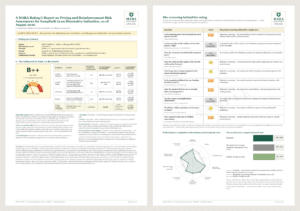
Is the clinical benefit the kind payers reward? — Clinical effectiveness
Sepiapterin shows a clear clinical advantage with significant improvement in primary outcomes, specifically a mean reduction of 395.9 _mol/L in blood phenylalanine levels compared to placebo, which is statistically significant (p<0.0001). The evidence is supported by phase 3 trial data, although the responder selection limits generalizability to the broader PKU population.
Does the economic case hold at the expected price? — Cost effectiveness
No cost-effectiveness data, including ICER or QALY estimates, were available in the reviewed sources. This absence of economic evaluation data renders the cost-effectiveness of sepiapterin unassessable, leading to a non-cost-effective classification.
Is there quality-of-life evidence payers weigh? — Quality of life
While there is potential for improved quality of life through increased dietary tolerance, no quantitative HRQoL data or utility values were reported in the available evidence. The PKU-QOL questionnaire was mentioned, but specific results were not provided, leading to a lack of demonstrated benefit.
Does the safety profile hold up for payers? — Safety and Adverse Effects
The safety profile of sepiapterin is acceptable, with a high incidence of treatment-emergent adverse events (TEAEs) reported, primarily mild gastrointestinal issues. No serious adverse events were noted in the phase 3 trial, indicating a good safety profile relative to placebo.
Was the drug compared against what payers expect? — Comparator Selection
The pivotal trial used placebo as a comparator, which is acceptable for internal validity but does not provide a direct comparison to an active standard of care. The AMPLIPHY trial offers a comparison to sapropterin, but the lack of simultaneous active comparator data in the pivotal trial limits the robustness of the evidence.
Is the population defined the way payers need it? — Patient Population and Subgroups
The trial population is broadly representative, including patients aged 1 month and older across multiple countries. Subgroup analyses by age and sex were conducted, although the racial diversity was limited, which may affect generalizability.
Does the drug fit how care is delivered and paid for? — Care Pathway Integration
Sepiapterin can be integrated into existing care pathways with minimal disruption, requiring only dietary management alongside treatment. The administration method is straightforward, involving oral dosing without the need for specialized training.
Are the wider system costs understood? — Resource Use and Cost Implications
The report did not provide any information on budget impact or resource implications associated with the use of sepiapterin, leading to a classification of unsustainable budget impact due to the absence of data.
Would the evidence survive payer scrutiny? — Evidence Quality and Robustness
The evidence is derived from multiple phase 3 trials with a robust design, including randomized, double-blind methodologies. However, the reliance on responder-defined populations and the absence of long-term outcomes limit the overall robustness.
How exposed is the case to uncertainty? — Uncertainty, Sensitivity, and Broader Impacts
There is significant uncertainty due to the lack of real-world effectiveness data and economic evaluations. While the treatment shows promise, the absence of broader impact assessments and sensitivity analyses raises concerns about its overall applicability.