What payers will ask
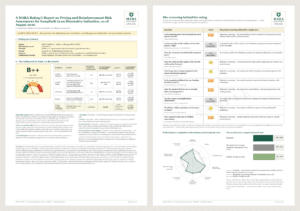
Is the clinical benefit the kind payers reward? — Clinical effectiveness
The evidence from the KEYNOTE-811 trial indicates that pembrolizumab plus trastuzumab and chemotherapy significantly improves progression-free survival and overall survival compared to trastuzumab plus chemotherapy, with hazard ratios of 0.64 and 0.70 respectively. However, the long-term effects remain uncertain, which prevents a higher rating.
Does the economic case hold at the expected price? — Cost effectiveness
The cost-effectiveness estimates for pembrolizumab plus trastuzumab and chemotherapy exceed the acceptable range typically considered by NICE, indicating low cost-effectiveness. The committee concluded that the ICER is not within the range that NICE usually considers acceptable.
Is there quality-of-life evidence payers weigh? — Quality of life
While the patient experts noted significant impacts on quality of life due to symptoms of gastric cancer, the document does not provide robust evidence of sustained improvements in HRQoL metrics specifically attributable to the treatment, leading to a mixed impact assessment.
Does the safety profile hold up for payers? — Safety and Adverse Effects
The treatment has a very good safety profile, with mostly mild to moderate adverse events reported. Serious adverse events are rare, indicating a favorable tolerability compared to existing therapies.
Was the drug compared against what payers expect? — Comparator Selection
The comparator used, trastuzumab plus chemotherapy, is the most relevant and appropriate standard of care for the patient population in question, as confirmed by both the company and the evaluation committee.
Is the population defined the way payers need it? — Patient Population and Subgroups
The trial population is broadly representative of the intended patient population, with a focus on those whose tumors express PD-L1 with a CPS of 1 or more. However, there are some concerns regarding the exclusion of the Asia cohort.
Does the drug fit how care is delivered and paid for? — Care Pathway Integration
The treatment can be integrated into existing care pathways with minor adjustments, as it aligns with current treatment protocols for HER2-positive gastric cancer.
Are the wider system costs understood? — Resource Use and Cost Implications
The treatment presents a notable cost burden that raises concerns about resource allocation, particularly given the high ICER estimates. This may necessitate restrictions on its use.
Would the evidence survive payer scrutiny? — Evidence Quality and Robustness
The evidence is based on a Phase 3 RCT (KEYNOTE-811) with a robust design, although there are some methodological concerns regarding the generalizability of the non-Asia cohort data.
How exposed is the case to uncertainty? — Uncertainty, Sensitivity, and Broader Impacts
There is significant uncertainty surrounding the long-term survival extrapolations and cost-effectiveness estimates, which could impact the decision-making process.