What payers will ask
Is the clinical benefit the kind payers reward? — Clinical effectiveness
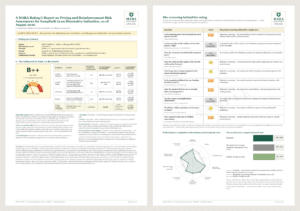
The clinical evidence for glofitamab comes from a single-arm, phase 1 to 2 trial (NP30179) which suggests a high rate of complete remission. However, there is no direct comparison with other treatments, and indirect comparisons indicate that while glofitamab may improve survival compared to some treatments, it is less effective than axicabtagene ciloleucel. The lack of direct evidence and reliance on indirect comparisons limits the strength of the clinical effectiveness claim.
Does the economic case hold at the expected price? — Cost effectiveness
The cost-effectiveness estimates for glofitamab are within the range that NICE considers acceptable for Healthcare resources. The committee concluded that glofitamab is cost-effective compared to relevant comparators, despite uncertainties in the model assumptions regarding excess mortality and cure rates.
Is there quality-of-life evidence payers weigh? — Quality of life
The committee noted that glofitamab offers a potential new treatment option that could improve quality of life for patients with relapsed or refractory DLBCL, as indicated by patient and clinical expert feedback. However, specific HRQoL data from validated instruments were not detailed in the document, leading to a moderate rating.
Does the safety profile hold up for payers? — Safety and Adverse Effects
Glofitamab has a very good safety profile, with significantly reduced odds of discontinuation due to adverse events compared to polatuzumab-BR. The committee noted that while there are some adverse events, they are manageable, leading to a strong rating for safety.
Was the drug compared against what payers expect? — Comparator Selection
The comparators selected for the evaluation included relevant treatments such as polatuzumab-BR and axicabtagene ciloleucel. However, the absence of direct comparisons and reliance on indirect treatment comparisons raises concerns about the robustness of the evidence.
Is the population defined the way payers need it? — Patient Population and Subgroups
The trial population included adults with relapsed or refractory DLBCL after two or more systemic treatments, which is representative of the intended patient population. However, there were some limitations in subgroup analyses, leading to a moderate rating.
Does the drug fit how care is delivered and paid for? — Care Pathway Integration
Glofitamab can be integrated into existing treatment pathways without requiring significant changes to infrastructure or training. The committee noted that it provides an accessible treatment option that does not necessitate travel to specialized centers, which is a positive aspect for integration.
Are the wider system costs understood? — Resource Use and Cost Implications
The budget impact of glofitamab is manageable, and the committee concluded that it is a resource-efficient option. However, the exact financial implications were not detailed, leading to a slightly conservative rating.
Would the evidence survive payer scrutiny? — Evidence Quality and Robustness
The evidence base is primarily derived from a single-arm trial, which limits the robustness of the findings. While there are indirect comparisons, the lack of direct evidence introduces uncertainty, warranting a B++ rating.
How exposed is the case to uncertainty? — Uncertainty, Sensitivity, and Broader Impacts
The committee acknowledged uncertainties related to the indirect comparisons and assumptions in the economic model. However, the context of unmet need and the potential benefits of glofitamab in improving access to treatment support a moderate rating.